Ansel adams
I would like to try and recreate the Yosemite pieces of work because of the high contrast. I like these images because of the black and white film and the 4x5 camera he took the images on.
Ansel Adams wanted to photograph Yosemite because when he was sick one day when he was 14 he read James Mason Hutchings' 496-page In the Heart of the Sierras, which caught he imagination and then he soon convinced hes parent to go to Yosemite. He walked around with his simple Kodak Brownie that his parents gave him, which then became the start to his love for photographing Yosemite National Park and he love for photography.
Yosemite National park, INFORMATION (nps.gov)
The dramatic plot-lines of Yosemite’s people set in its special places
reveal poetic accounts of discovery, survival, hope, and defeat.
History books detail the Valley's discovery by Euro-Americans in the
years just before 1851 and probably as early as 1833. Then, the Mariposa
Battalion entered Yosemite Valley on March 27, 1851, as a punitive
expedition connected to the Mariposa Indian War. As white settlement
soon occurred, a stream of visitors followed on foot, on horseback and
by rail (to just outside the park)—staying at rustic hotels owned by
adventuresome entrepreneurs. Parts of the landscape became
exploited—livestock grazed in meadows and orchards replaced native
vegetation—spurring conservationists to appeal for protections.
President Abraham Lincoln signed an 1864 bill granting Yosemite Valley
and the Mariposa Grove of Giant Sequoias to the State of California as
an inalienable public trust. John Muir sparked the creation of Yosemite
National Park in 1890 after he witnessed the devastation of the
subalpine meadows by domestic sheepherds. Hetch Hetchy Valley became the
center of a bitter political struggle a decade later when the city of
San Francisco wanted to dam the Tuolumne River as a source of drinking
water. These captivating stories weave one into another with the next
chapter yet to be told.
Anthropologists began studying Yosemite’s cultural heritage in the late
1800s. Since then, archeologists have documented more than 1,500
archeological sites that hold material remnants of past lifeways. By
systematically study things left behind—such as tools, ornaments,
buildings, food remains, changed landscapes, and indicators of ancient
environments—archeologists decipher a cultural chronology and the
processes that underlie human behavior. Yosemite archeologists find and
document about 25 new sites each year.
This information above came from www.nps.gov
Yosemite national park has been inhabited for nearly 3000 years by humans and animals.A band of Native Americans called the Ahwahneechee lived in Yosemite Valley when the first non-indigenous people entered it.
Wednesday, 17 April 2013

Wednesday, 27 March 2013
Evaluation
The things i liked doing about this assignment were to go to tockholes woods and photograph the surrounding environment. I also liked using different types of camera and also using different lens. The thing i disliked about this was shooting in the cold weather.
If i was to do this assignment again i would try and take more images, and to use my time better than i have done.
On one of my images, i had rain on the film when i was developing it so i have a water mark on a few images. if i was to do these images again i would try and do it in different weather. The rain managed to get inside the dark slide and then dried.
I have gone to tockholes to shoot landscapes because, I was going to try and copy Ansel Adams' high contrast black and white landscape images.
If i was to do this assignment again i would try and take more images, and to use my time better than i have done.
On one of my images, i had rain on the film when i was developing it so i have a water mark on a few images. if i was to do these images again i would try and do it in different weather. The rain managed to get inside the dark slide and then dried.
I have gone to tockholes to shoot landscapes because, I was going to try and copy Ansel Adams' high contrast black and white landscape images.
Tuesday, 26 March 2013


Edward Weston
Weston was born in Chicago and moved to California when he was 21. He knew
he wanted to be a photographer from an early age, and initially his
work was typical of the soft focus pictorialism
that was popular at the time. Within a few years, however, he abandoned
that style and went on to be one of the foremost champions of highly
detailed photographic images.
(wikipedia)

I like this image because of how the water/frost sits on the spiders web. I also like this because of how the foreground is in focus but the background is out of focus.
(wikipedia)
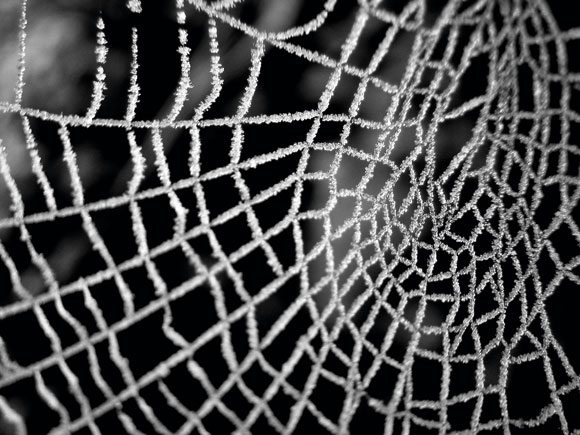
I like this image because of how the water/frost sits on the spiders web. I also like this because of how the foreground is in focus but the background is out of focus.
Robert Adams
Robert Adams (born May 8, 1937) is an American photographer who
has focused on the changing landscape of the American West. His work
first came to prominence in the mid-1970s through the book The New West (1974) and the exhibition New Topographics: Photographs of a Man-Altered Landscape (1975). He was a John Simon Guggenheim Memorial Foundation Fellow in photography in 1973 and 1980, and he received the MacArthur Foundation's MacArthur Fellowship in 1994.
(wikipedia)

I like this image because of the low cloud/mist. If I was to shoot this image my self i would try and make the foreground abit lighter by altering my exposure.
(wikipedia)

I like this image because of the low cloud/mist. If I was to shoot this image my self i would try and make the foreground abit lighter by altering my exposure.

Sunday, 24 March 2013
Fay Godwin
Fay Godwin (17 February 1931 – 27 May 2005) was a British photographer known for her black-and-white landscapes of the British countryside and coast.
(wikipedia)

I like this image because it is a little bit dark, and everything is in focus. if i was to shoot this image i would try it from different angles and see which one is the best one. I would also try and make it abit lighter.
(wikipedia)
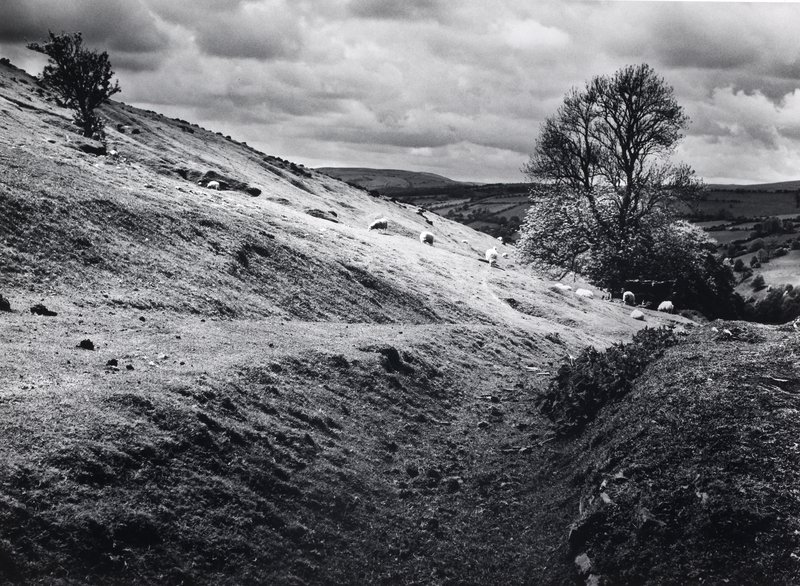
I like this image because it is a little bit dark, and everything is in focus. if i was to shoot this image i would try it from different angles and see which one is the best one. I would also try and make it abit lighter.
Wednesday, 27 February 2013
Ansel Adams
Ansel Easton Adams (February 20, 1902 – April 22, 1984) was an American photographer and environmentalist best known for his black-and-white landscape photographs of the American West, especially Yosemite National Park.
With Fred Archer, Adams developed the Zone System as a way to determine proper exposure and adjust the contrast of the final print. The resulting clarity and depth characterized his photographs and the work of those to whom he taught the system. Adams primarily used large-format cameras despite their size, weight, setup time, and film cost, because their high resolution helped ensure sharpness in his images.
Adams founded the Group f/64 along with fellow photographers Willard Van Dyke and Edward Weston. Adams's photographs are reproduced on calendars, posters, and in books, making his photographs widely distributed.
(wikipedia)

With Fred Archer, Adams developed the Zone System as a way to determine proper exposure and adjust the contrast of the final print. The resulting clarity and depth characterized his photographs and the work of those to whom he taught the system. Adams primarily used large-format cameras despite their size, weight, setup time, and film cost, because their high resolution helped ensure sharpness in his images.
Adams founded the Group f/64 along with fellow photographers Willard Van Dyke and Edward Weston. Adams's photographs are reproduced on calendars, posters, and in books, making his photographs widely distributed.
(wikipedia)
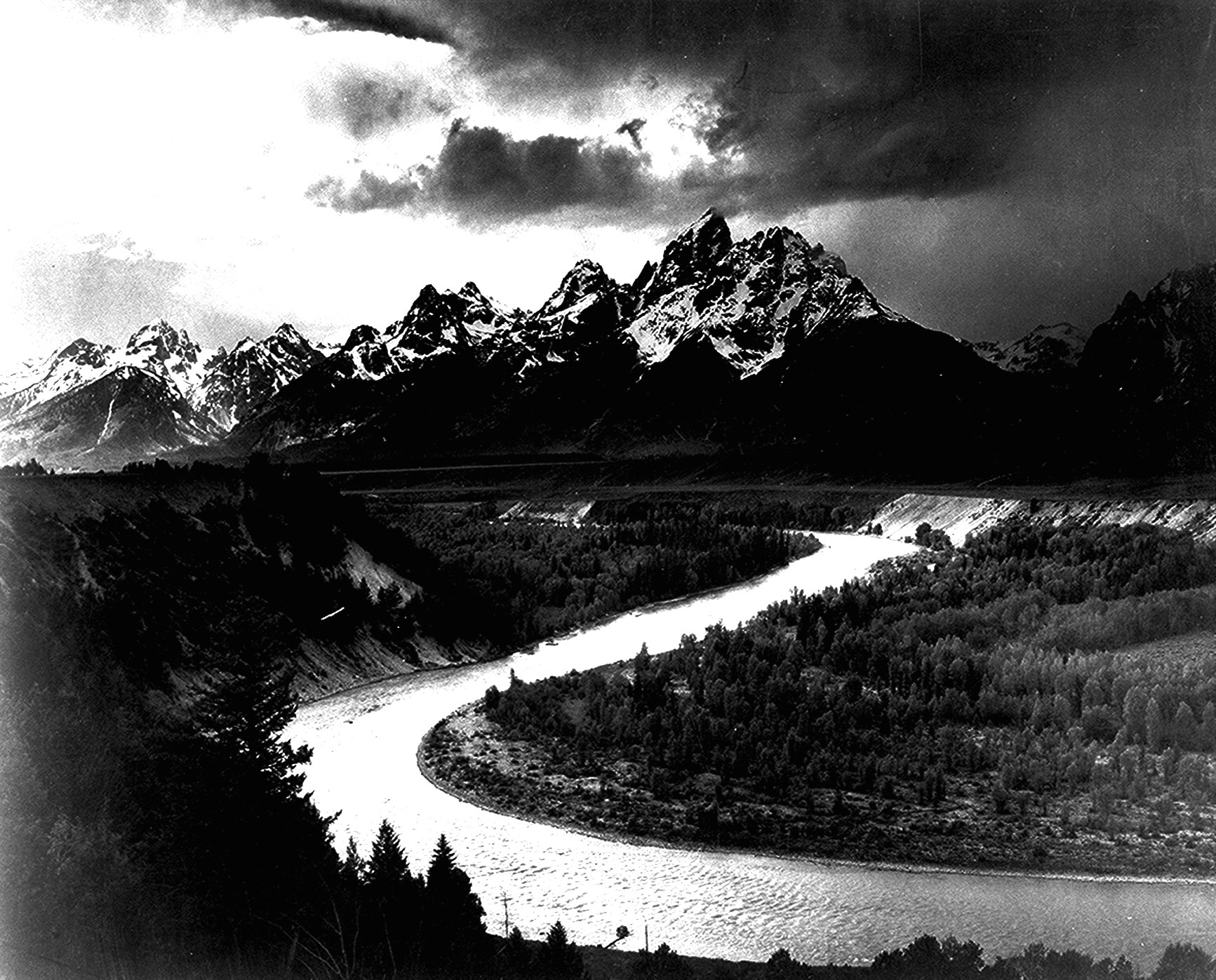
I like this image because of how i think it works in black and white. If i was to shoot this photo i would try and clean it up on photoshop, i would also change the aperture and make it abit brighter.
Wednesday, 5 December 2012


Wednesday, 14 November 2012
Initial ideas
My initial ideas are:
i showed some work to carlton which i thought was not very good, however he though they were really good. so i am now thinking of documenting tockholes.
list of ideas:
Rivers
Trees
Public houses
buisness
i am also going to get a map of tockholes and mark certain areas were i am going to photograph.
the equipment i am going to use is:
tripod
dSLR
SLR 35mm-black and white film
colour film
Medium format
and maybe large format.
i showed some work to carlton which i thought was not very good, however he though they were really good. so i am now thinking of documenting tockholes.
list of ideas:
Rivers
Trees
Public houses
buisness
i am also going to get a map of tockholes and mark certain areas were i am going to photograph.
the equipment i am going to use is:
tripod
dSLR
SLR 35mm-black and white film
colour film
Medium format
and maybe large format.
Wednesday, 7 November 2012
PSD
- .psd (Photoshop document), the default file extension of the proprietary file format of Adobe System's Photoshop program.
- A portable or personal storage device, small hard disks designed to copy digital photographs from a camera
- Programmable system device, an integrated circuit manufactured by ST Microelectronics and including Flash-ROM, RAM, and logic functions on a single chip
- Program structure diagram, also known as a Nassi–Shneiderman diagram
- Pose Space Deformation, a computer character animation technique
- Professional Scrum Developer, a course leading to certification for Scrum (development)
TIFF
TIFF (originally standing for Tagged Image File Format) is a file format for storing images, popular among graphic artists, the publishing industry, and both amateur and professional photographers in general. As of 2009, it is under the control of Adobe Systems. Originally created by the company Aldus for use with what was then called "desktop publishing", the TIFF format is widely supported by image-manipulation applications, by publishing and page layout applications, by scanning, faxing, word processing, optical character recognition and other applications.
Adobe Systems, which acquired Aldus, now holds the copyright to the
TIFF specification. TIFF has not had a major update since 1992, though
several Aldus/Adobe technical notes have been published with minor
extensions to the format, and several specifications, including TIFF/EP (ISO 12234-2), TIFF/IT (ISO 12639), TIFF-F (RFC 2306) and TIFF-FX (RFC 3949) have been based on the TIFF 6.0 specification.
JPEG
The file format
known as "JPEG Interchange Format" (JIF) is specified in Annex B of the
standard. However, this "pure" file format is rarely used, primarily
because of the difficulty of programming encoders and decoders that
fully implement all aspects of the standard and because of certain
shortcomings of the standard:
Thus, in some ways JFIF is a cutdown version of the JIF standard in that it specifies certain constraints (such as not allowing all the different encoding modes), while in other ways it is an extension of JIF due to the added metadata. The documentation for the original JFIF standard states:
Strictly speaking, the JFIF and Exif standards are incompatible because they each specify that their marker segment (APP0 or APP1, respectively) appears first. In practice, most JPEG files contain a JFIF marker segment that precedes the Exif header. This allows older readers to correctly handle the older format JFIF segment, while newer readers also decode the following Exif segment, being less strict about requiring it to appear first.
- Color space definition
- Component sub-sampling registration
- Pixel aspect ratio definition.
Thus, in some ways JFIF is a cutdown version of the JIF standard in that it specifies certain constraints (such as not allowing all the different encoding modes), while in other ways it is an extension of JIF due to the added metadata. The documentation for the original JFIF standard states:
- JPEG File Interchange Format is a minimal file format which enables JPEG bitstreams to be exchanged between a wide variety of platforms and applications. This minimal format does not include any of the advanced features found in the TIFF JPEG specification or any application specific file format. Nor should it, for the only purpose of this simplified format is to allow the exchange of JPEG compressed images.
Strictly speaking, the JFIF and Exif standards are incompatible because they each specify that their marker segment (APP0 or APP1, respectively) appears first. In practice, most JPEG files contain a JFIF marker segment that precedes the Exif header. This allows older readers to correctly handle the older format JFIF segment, while newer readers also decode the following Exif segment, being less strict about requiring it to appear first.
Wednesday, 24 October 2012
RGB
-->

The RGB colour model is an addictive colour
model in which red, green, and blue light are added together in various ways to
reproduce a broad array of colours. The name of the model comes from the
initials of the three addictive primary colour, red, green, and blue.
The main purpose of the RGB color model is for
the sensing, representation, and display of images in electronic systems, such
as televisions and computers, though it has also been used in conventional
photography. Before the electronic age, the RGB color model already had a solid
theory behind it, based in human perception of colours.
Adobe RGB
The Adobe RGB color space is
an RGB color space developed by Adobe Systems in 1998. It was designed to
encompass most of the colors achievable on CMYK color printers, but by using
RGB primary colors on a device such as the computer display. The Adobe RGB color
space encompasses roughly 50% of the visible colors specified by the Lab color
space, improving upon the gamut of the sRGB color space primarily in
cyan-greens.

SRGB
SRGB
SRGB is a standard RGB colour space created
cooperatively by HP and Microsoft in 1996 for use on monitors, printers, and
the Internet.
SRGB uses the ITU-R BT.709 primaries, the
same as are used in studio monitors and HDTV and a transfer function (gamma
curve) typical of CRTs. This specification allowed SRGB to be directly
displayed on typical CRT monitors of the time, a factor that greatly aided its
acceptance.
Unlike most other RGB colour spaces, the
SRGB gamma cannot be expressed as a single numerical value. The overall gamma
is approximately 2.2, consisting of a linear (gamma 1.0) section near black,
and a non-linear section elsewhere involving a 2.4 exponent and a gamma (slope
of log output versus log input) changing from 1.0 through about 2.3.

CYMK
CYMK
The CMYK colour model (process colour, four
colour) is a subtractive colour model, used in colour printing, and is also
used to describe the printing process itself. CMYK refers to the four inks used
in some colour printing: cyan, magenta, yellow, and key (black). Though it
varies by print house, press operator, press manufacturer, and press run, ink
is typically applied in the order of the abbreviation.
The "K" in CMYK stands for key
since in four-color printing cyan, magenta, and yellow printing plates are
carefully keyed or aligned with the key of the black key plate. Some sources
suggest that the "K" in CMYK comes from the last letter in
"black" and was chosen because B already means blue. However, this
explanation, although useful as a mnemonic, is incorrect.
The CMYK model works by partially or
entirely masking colours on a lighter, usually white, background. The ink
reduces the light that would otherwise be reflected. Such a model is called
subtractive because inks "subtract" brightness from white.
In additive colour models such as RGB,
white is the "additive" combination of all primary coloured lights,
while black is the absence of light. In the CMYK model, it is the opposite:
white is the natural colour of the paper or other background, while black
results from a full combination of coloured inks. To save money on ink, and to
produce deeper black tones, using black ink instead of the combination of cyan,
magenta and yellow produces unsaturated and dark colours.

Wednesday, 17 October 2012
black and white editing
Fist select your image.
then go to Image, Adjustments, Black and White.

Then you can choose how dark you want the reds or yellows Etc.

then choose how dark you want the image to be :D

Then go to image, adjustments and then click on brightness/ contrast.
and then do a low contrast picture (shown above).
and then do a high contrast image(shown below).

And there you go you now have black and white image, a low contrast black and white, and a high contrast image.
then go to Image, Adjustments, Black and White.

Then you can choose how dark you want the reds or yellows Etc.

then choose how dark you want the image to be :D

Then go to image, adjustments and then click on brightness/ contrast.

and then do a low contrast picture (shown above).
and then do a high contrast image(shown below).

And there you go you now have black and white image, a low contrast black and white, and a high contrast image.
Photography and Privacy
Photography and privacy
A right to privacy exists in the UK law, as a consequence of the incorporation of the European Convention on Human Rights into domestic law through the Human Rights Act 1998. This can result in restrictions on the publication of photography.
Whether this right is caused by horizontal effect of the Human Rights Act 1998 or is judicially created is a matter of some controversy. The right to privacy is protected by Article 8 of the convention. In the context of photography, it stands at odds to the Article 10 right of freedom of expression. As such, courts will consider the public interest in balancing the rights through the legal test of proportionality.
A very limited statutory right to privacy exists in the Copyright Designs and Patents Act 1988. This right is held, for example, by someone who hires a photographer to photograph their wedding. The commissioner, irrespective of any copyright which he does or does not hold in the photograph of a photograph which was commissioned for private and domestic purposes, where copyright subsists in the photograph, has the right not to have copies of the work issued to the public, the work exhibited in public or the work communicated to the public. However, this right will not be infringed if the rightholder gives permission. It will not be infringed if the photograph is incidentally included in an artistic work, film, or broadcast.
Infringement
Infringement
Infringement of the copyright which subsists in a photograph can be performed though copying the photograph. This is because the owner of the copyright in the photograph has the exclusive right to copy the photograph. For there to be infringement of the copyright in a photograph, there must be copying of a substantial part of the photograph. A photograph can also be a mechanism of infringement of the copyright which subsists in another work. For example, a photograph which copies a substantial part of an artistic work, such as a sculpture, painting, architectural work (building) or another photograph (without permission) would infringe the copyright which subsists in those works.
However, the subject matter of a photograph is not necessarily subject to an independent copyright. For example, in the Creation Records case, a photographer, attempting to create a photograph for an album cover, set up an elaborate and artificial scene. A photographer from a newspaper covertly photographed the scene and published it in the newspaper. The court held that the newspaper photographer did not infringe the official photographer's copyright. Copyright did not subsist in the scene itself – it was too temporary to be a collage, and could not be categorised as any other form of artistic work.
The protection of photographs in this manner has been criticised on two grounds. Firstly, it is argued that photographs should not be protected as artistic works, but should instead be protected in a manner similar to that of sound recordings and films. In other words, copyright should not protect the subject matter of a photograph as a matter of course as a consequence of a photograph being taken. It is argued that protection of photographs as artistic works is anomalous, in that photography is ultimately a medium of reproduction, rather than creation. As such, it is more similar to a film, or sound recording than a painting or sculpture. Some photographers share this view. For example, Michael Reichmann describes photography as an art of disclosure, as opposed to an art of inclusion. Secondly, it is argued that the protection of photographs as artistic works leads to bizarre results. Subject matter is protected irrespective of the artistic merit of a photograph. The subject matter of a photograph is protected even when it is not deserving of protection. For copyright to subsist in photographs as artistic works, the photographs must be original, since the English test for originality is based on skill, labour and judgment. That said, it is possible that the threshold of originality is very low. Essentially, by this, Arnold is arguing that whilst the subject matter of some photographs may deserve protection, it is inappropriate for the law the presume that the subject matter of all photographs is deserving of protection.
It is possible to say with a high degree of confidence that photographs of three-dimensional objects, including artistic works, will be treated by a court as themselves original artistic works, and as such, will be subject to copyright. It is likely that a photograph (including a scan – digital scanning counts as photography for the purposes of the Copyright Designs and Patents Act 1988) of a two dimensional artistic work, such as another photograph or a painting will also be subject to copyright if a significant amount of skill, labour and judgment went into its creation.
Subscribe to:
Posts (Atom)