Ansel adams
I would like to try and recreate the Yosemite pieces of work because of the high contrast. I like these images because of the black and white film and the 4x5 camera he took the images on.
Ansel Adams wanted to photograph Yosemite because when he was sick one day when he was 14 he read James Mason Hutchings' 496-page In the Heart of the Sierras, which caught he imagination and then he soon convinced hes parent to go to Yosemite. He walked around with his simple Kodak Brownie that his parents gave him, which then became the start to his love for photographing Yosemite National Park and he love for photography.
Yosemite National park, INFORMATION (nps.gov)
The dramatic plot-lines of Yosemite’s people set in its special places
reveal poetic accounts of discovery, survival, hope, and defeat.
History books detail the Valley's discovery by Euro-Americans in the
years just before 1851 and probably as early as 1833. Then, the Mariposa
Battalion entered Yosemite Valley on March 27, 1851, as a punitive
expedition connected to the Mariposa Indian War. As white settlement
soon occurred, a stream of visitors followed on foot, on horseback and
by rail (to just outside the park)—staying at rustic hotels owned by
adventuresome entrepreneurs. Parts of the landscape became
exploited—livestock grazed in meadows and orchards replaced native
vegetation—spurring conservationists to appeal for protections.
President Abraham Lincoln signed an 1864 bill granting Yosemite Valley
and the Mariposa Grove of Giant Sequoias to the State of California as
an inalienable public trust. John Muir sparked the creation of Yosemite
National Park in 1890 after he witnessed the devastation of the
subalpine meadows by domestic sheepherds. Hetch Hetchy Valley became the
center of a bitter political struggle a decade later when the city of
San Francisco wanted to dam the Tuolumne River as a source of drinking
water. These captivating stories weave one into another with the next
chapter yet to be told.
Anthropologists began studying Yosemite’s cultural heritage in the late
1800s. Since then, archeologists have documented more than 1,500
archeological sites that hold material remnants of past lifeways. By
systematically study things left behind—such as tools, ornaments,
buildings, food remains, changed landscapes, and indicators of ancient
environments—archeologists decipher a cultural chronology and the
processes that underlie human behavior. Yosemite archeologists find and
document about 25 new sites each year.
This information above came from www.nps.gov
Yosemite national park has been inhabited for nearly 3000 years by humans and animals.A band of Native Americans called the Ahwahneechee lived in Yosemite Valley when the first non-indigenous people entered it.
Wednesday, 17 April 2013

Wednesday, 27 March 2013
Evaluation
The things i liked doing about this assignment were to go to tockholes woods and photograph the surrounding environment. I also liked using different types of camera and also using different lens. The thing i disliked about this was shooting in the cold weather.
If i was to do this assignment again i would try and take more images, and to use my time better than i have done.
On one of my images, i had rain on the film when i was developing it so i have a water mark on a few images. if i was to do these images again i would try and do it in different weather. The rain managed to get inside the dark slide and then dried.
I have gone to tockholes to shoot landscapes because, I was going to try and copy Ansel Adams' high contrast black and white landscape images.
If i was to do this assignment again i would try and take more images, and to use my time better than i have done.
On one of my images, i had rain on the film when i was developing it so i have a water mark on a few images. if i was to do these images again i would try and do it in different weather. The rain managed to get inside the dark slide and then dried.
I have gone to tockholes to shoot landscapes because, I was going to try and copy Ansel Adams' high contrast black and white landscape images.
Tuesday, 26 March 2013


Edward Weston
Weston was born in Chicago and moved to California when he was 21. He knew
he wanted to be a photographer from an early age, and initially his
work was typical of the soft focus pictorialism
that was popular at the time. Within a few years, however, he abandoned
that style and went on to be one of the foremost champions of highly
detailed photographic images.
(wikipedia)

I like this image because of how the water/frost sits on the spiders web. I also like this because of how the foreground is in focus but the background is out of focus.
(wikipedia)
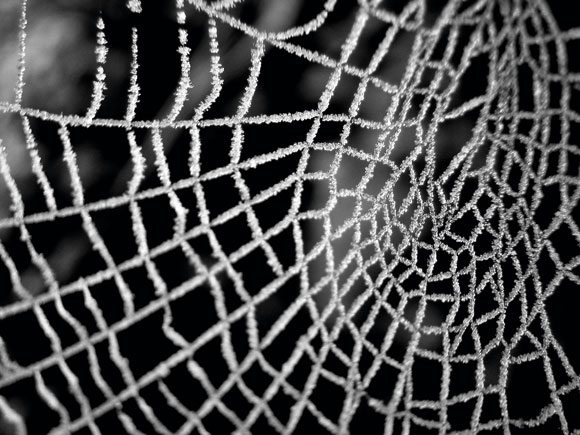
I like this image because of how the water/frost sits on the spiders web. I also like this because of how the foreground is in focus but the background is out of focus.
Robert Adams
Robert Adams (born May 8, 1937) is an American photographer who
has focused on the changing landscape of the American West. His work
first came to prominence in the mid-1970s through the book The New West (1974) and the exhibition New Topographics: Photographs of a Man-Altered Landscape (1975). He was a John Simon Guggenheim Memorial Foundation Fellow in photography in 1973 and 1980, and he received the MacArthur Foundation's MacArthur Fellowship in 1994.
(wikipedia)

I like this image because of the low cloud/mist. If I was to shoot this image my self i would try and make the foreground abit lighter by altering my exposure.
(wikipedia)

I like this image because of the low cloud/mist. If I was to shoot this image my self i would try and make the foreground abit lighter by altering my exposure.

Sunday, 24 March 2013
Fay Godwin
Fay Godwin (17 February 1931 – 27 May 2005) was a British photographer known for her black-and-white landscapes of the British countryside and coast.
(wikipedia)

I like this image because it is a little bit dark, and everything is in focus. if i was to shoot this image i would try it from different angles and see which one is the best one. I would also try and make it abit lighter.
(wikipedia)
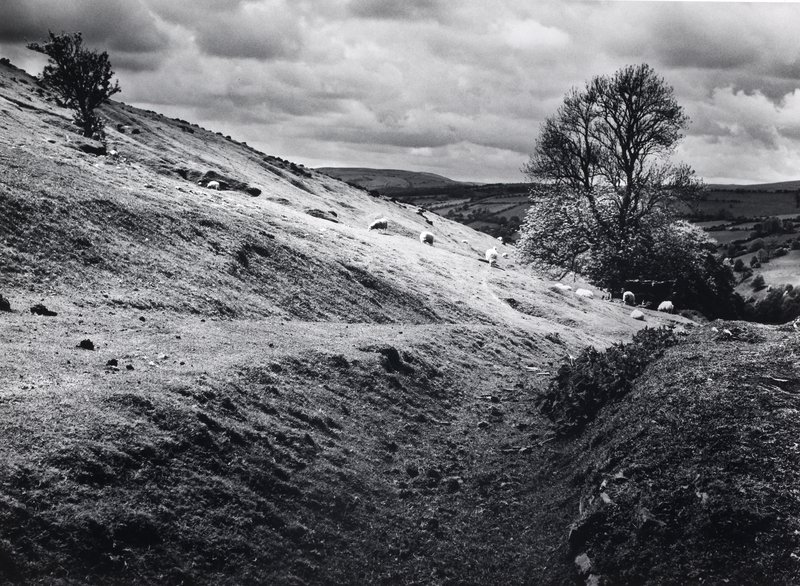
I like this image because it is a little bit dark, and everything is in focus. if i was to shoot this image i would try it from different angles and see which one is the best one. I would also try and make it abit lighter.
Subscribe to:
Posts (Atom)